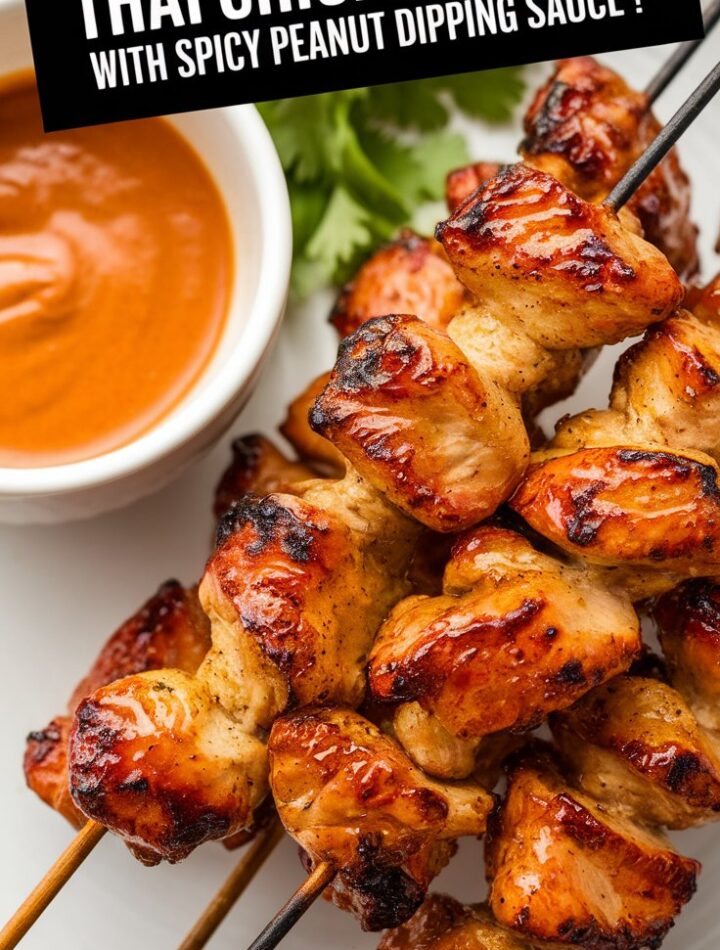
If there’s one dish that perfectly captures the balance, aroma, and depth of Thai cuisine, it’s Thai Chicken Satay with Spicy Peanut Dipping Sauce. This flavorful combination of marinated, tender chicken skewers grilled to golden perfection and paired with a rich, creamy peanut sauce is a true masterpiece of Southeast Asian cooking. With its sweet, savory, spicy, and tangy flavor notes, this dish transforms even a simple meal into a celebration of taste and texture.
In today’s culinary world, where people crave authenticity and health-conscious cooking, this recipe stands out for its versatility, boldness, and simplicity. Whether you’re hosting a dinner party, meal-prepping for the week, or simply craving something exotic yet approachable, Thai Chicken Satay will always impress.
In this comprehensive guide, we’ll walk you through every detail—from understanding the roots of satay to the secrets of making restaurant-quality chicken skewers and a perfect peanut dipping sauce at home.
What Is Thai Chicken Satay?
Satay (also spelled sate) is a popular Southeast Asian dish featuring marinated meat skewered and grilled, usually served with a flavorful dipping sauce. While satay originated in Indonesia, it has become a beloved street food across Thailand, Malaysia, and Singapore.
In Thailand, Gai Satay (chicken satay) is often found sizzling over charcoal grills in markets and food stalls, releasing aromas of lemongrass, turmeric, garlic, and coconut milk. It’s typically served with a side of spicy peanut dipping sauce (Nam Jim Satay) and cucumber relish (Ajat), creating a harmony of flavors that’s unmistakably Thai.
Why This Recipe Deserves a Spot in Your Kitchen
Thai Chicken Satay isn’t just another grilled chicken recipe—it’s a combination of flavor-building techniques that make every bite memorable.
Here’s why you’ll love this recipe:
- Authentic Thai flavor with easy-to-find ingredients.
- Flexible cooking methods – grill, oven, or stovetop.
- Balanced flavor profile – savory, sweet, spicy, and tangy.
- Meal prep-friendly – marinate ahead for convenience.
- Gluten- and dairy-free when made with the right substitutes.
This dish bridges the gap between street food charm and home-cooked sophistication. With just a few techniques and the right marinade, you can bring the flavors of Bangkok to your table.
Ingredients You’ll Need
Let’s break down the essentials for both the marinated chicken and the spicy peanut dipping sauce.
For the Chicken Satay Marinade:
- 1 pound boneless, skinless chicken breasts or thighs (cut into ½-inch strips)
- 1 stalk fresh lemongrass, finely chopped (or 1 teaspoon lemon zest if unavailable)
- 2 tablespoons soy sauce or tamari (for gluten-free)
- 2 tablespoons fish sauce
- 1 tablespoon lime juice (freshly squeezed)
- 2 teaspoons minced garlic
- 1 teaspoon ground turmeric
- 1 teaspoon ground coriander
- 2 tablespoons light brown sugar or palm sugar
- 2 tablespoons vegetable oil
- 1 teaspoon Sriracha or chili paste (adjust for spice preference)
For the Spicy Peanut Dipping Sauce:
- ½ cup creamy peanut butter (not natural or oily types)
- ¼ cup hot water (to thin)
- 2 tablespoons Thai red curry paste
- 1 tablespoon soy sauce
- 1 tablespoon rice vinegar
- 2 tablespoons lime juice
- 2 tablespoons brown sugar or palm sugar
- 1 tablespoon Sriracha or chili garlic sauce
- 1 teaspoon minced garlic
- ½ teaspoon red pepper flakes (optional)
- 2 scallions, finely sliced
- Pinch of salt to taste
Optional Garnishes and Sides:
- Chopped peanuts
- Fresh cilantro
- Lime wedges
- Jasmine or coconut rice
- Cucumber salad
The Secret Behind Perfect Satay Marinade
A great satay begins with a flavor-packed marinade. The goal is to infuse the chicken with aromatics that penetrate deeply and caramelize beautifully on the grill.
Key Flavor Builders
- Lemongrass – provides that citrusy, bright fragrance central to Thai cuisine.
- Fish sauce – adds umami depth that can’t be replicated.
- Turmeric and coriander – create the warm, golden hue and earthy tone.
- Palm sugar – balances heat and acidity for a rounded taste.
- Sriracha – introduces a controlled kick without overpowering the flavor.
Marinating Tips
- Marinate for at least 1 hour, though overnight gives best results.
- Always refrigerate during marination to keep the chicken safe.
- If using bamboo skewers, soak them in water for 30 minutes to prevent burning.
Step-by-Step Instructions
Step 1: Prepare the Marinade
In a blender or food processor, combine lemongrass, soy sauce, fish sauce, lime juice, garlic, turmeric, coriander, brown sugar, vegetable oil, and Sriracha. Blend until smooth. Pour the mixture over the chicken strips and coat evenly.
Step 2: Marinate the Chicken
Transfer to a sealed bowl or plastic bag and refrigerate for at least 1 hour. Turn the chicken occasionally to ensure full coverage.
Step 3: Prepare the Peanut Sauce
In a mixing bowl, whisk peanut butter and hot water until smooth. Add curry paste, soy sauce, vinegar, lime juice, brown sugar, Sriracha, garlic, and red pepper flakes. Stir well, then fold in scallions. Adjust thickness by adding more hot water if needed.
Step 4: Grill the Chicken
Heat your grill or grill pan over medium-high heat. Thread marinated chicken onto soaked skewers and grill for 3–4 minutes per side, or until golden brown and cooked through (internal temp: 165°F).
If you don’t have a grill, you can broil or pan-sear the skewers instead—just cook until slightly charred and juicy.
Step 5: Serve and Garnish
Arrange the chicken skewers on a platter. Serve with the spicy peanut sauce on the side. Garnish with chopped peanuts, cilantro, and lime wedges.
Serving Ideas
Thai Chicken Satay is incredibly versatile. You can enjoy it as a snack, appetizer, or a complete meal. Here are a few serving styles:
1. Classic Street-Style Platter
Serve the skewers on a banana leaf or wooden board with a small bowl of peanut sauce in the center. Add lime wedges and a sprinkle of cilantro for that authentic Thai street market vibe.
2. Satay Rice Bowl
Layer jasmine rice or coconut rice with sliced chicken satay, drizzle peanut sauce on top, and add fresh cucumbers or pickled carrots.
3. Lettuce Wraps
For a lighter meal, wrap grilled satay pieces in lettuce leaves and top with shredded carrots, herbs, and sauce. Perfect for low-carb diets.
4. Thai Noodle Bowl
Combine rice noodles, satay chicken, vegetables, and peanut sauce for a hearty, restaurant-style noodle bowl.
5. Party Skewers
Serve smaller satay sticks at gatherings with various dips—peanut sauce, sweet chili sauce, or soy-ginger glaze—for crowd-pleasing variety.
Expert Tips for Best Results
- Marinate Overnight: Deepens flavor and tenderness.
- Use Chicken Thighs: They retain more moisture and flavor than breasts.
- Avoid Overcrowding the Grill: Give each skewer space for proper caramelization.
- Balance Your Sauce: Adjust sweetness and spice before serving.
- Let Chicken Rest: Rest for five minutes after grilling to lock in juices.
- Use Coconut Milk: For a richer marinade, replace part of the oil with coconut milk.
- Double the Sauce: It’s versatile—use leftovers for salads or noodles.
Common Mistakes to Avoid
- Skipping the Lemongrass: It’s key to authentic Thai aroma.
- Using Natural Peanut Butter: It separates when heated—use creamy instead.
- Overcooking the Chicken: Remove from heat as soon as it hits 165°F.
- Adding Too Much Water to Sauce: It dilutes flavor; thin gradually.
- Not Preheating the Grill: A hot grill ensures perfect sear marks and juicy meat.
- Uneven Chicken Sizes: Cut pieces uniformly for consistent cooking.
Recommended Side Dishes
To round out your Thai-inspired meal, pair your satay with any of these side dishes:
- Cucumber Salad (Ajat): Crisp cucumbers, red onion, and rice vinegar.
- Jasmine Rice: Mild and fragrant, balances spicy flavors.
- Coconut Rice: Creamy and aromatic, pairs beautifully with peanut sauce.
- Thai Papaya Salad (Som Tum): Adds crunch and tang.
- Grilled Pineapple: Sweet and smoky complement to spicy satay.
- Thai Spring Rolls: Light and fresh contrast.
- Pickled Vegetables: Adds acidity and balance.
- Steamed Bok Choy: A clean, subtle vegetable side.
Storage and Reheating Instructions
Storing:
- Cooked Chicken: Refrigerate in an airtight container for up to 4 days.
- Peanut Sauce: Store separately in a sealed jar for up to 2 weeks.
- Uncooked Chicken in Marinade: Keep refrigerated up to 24 hours.
Reheating:
- Chicken: Microwave in short intervals or warm in a skillet over low heat.
- Peanut Sauce: Reheat gently with a splash of warm water to loosen.
Freezing:
- Freeze cooked chicken skewers up to 3 months. Thaw overnight in fridge.
- Peanut sauce is best made fresh; freezing can alter its texture.
Nutritional Information (Per Serving)
- Calories: 410–420 kcal
- Protein: ~32g
- Fat: ~22g
- Carbohydrates: ~20g
- Fiber: ~3g
This balance makes Thai Chicken Satay a satisfying meal that’s rich in protein, moderate in carbs, and packed with flavor—perfect for a healthy weeknight dinner.
Frequently Asked Questions (FAQs)
1. Can I use other proteins besides chicken?
Absolutely! Try shrimp, beef, or tofu. Adjust cook time based on the protein used.
2. Is this recipe gluten-free?
Yes, if you use tamari instead of soy sauce.
3. Can I prepare it without a grill?
Yes, you can pan-sear on a stovetop grill pan or broil in the oven.
4. How spicy is it?
Moderately spicy. Adjust Sriracha and red pepper flakes to your liking.
5. Can I make the sauce ahead of time?
Definitely. The sauce stores well in the refrigerator for up to two weeks.
6. What’s a good substitute for lemongrass?
Use a mix of lemon zest and grated ginger for similar brightness.
7. Can I make it vegetarian?
Yes—replace chicken with tofu or tempeh and use soy sauce instead of fish sauce.
Cultural Significance: A Taste of Thai Street Food
In Thailand, satay isn’t just food—it’s an experience. Vendors grill skewers over open flames, basting them with coconut milk marinades as the aroma fills the air. Each bite tells a story of cultural fusion: influences from Indonesia, local Thai spices, and the communal joy of eating together.
By preparing this dish at home, you’re not only cooking—you’re connecting with a tradition that values balance, freshness, and togetherness. Every bite reflects Thailand’s food philosophy: contrast and harmony in equal measure.
Health Benefits
Thai Chicken Satay is more than delicious—it’s also nutritious.
- Protein-rich: Ideal for muscle repair and energy.
- Turmeric: Contains curcumin, a natural anti-inflammatory.
- Garlic: Boosts immune function.
- Lime juice and vinegar: Aid digestion and provide vitamin C.
- Peanuts: Add heart-healthy fats and protein.
When grilled instead of fried, it’s a wholesome, balanced dish that fits easily into a healthy eating plan.
Modern Twists and Variations
- Air Fryer Satay: Quick, clean, and ideal for small batches—cook skewers at 375°F for 10–12 minutes.
- Vegan Satay: Substitute tofu for chicken and use coconut aminos instead of fish sauce.
- Honey-Lime Satay: Add honey for sweetness and glaze for a sticky finish.
- Spicy Cashew Sauce: Swap peanuts for cashews for a rich, nutty flavor.
- Coconut Curry Satay: Blend coconut milk and curry powder into the marinade for a Thai-Malay fusion.
Chef’s Insight: Balancing Thai Flavors
Thai cooking revolves around five essential elements: sweet, sour, salty, spicy, and umami. To achieve harmony:
- Sweetness comes from palm sugar.
- Sourness from lime juice or vinegar.
- Saltiness from soy or fish sauce.
- Spiciness from chili or Sriracha.
- Umami from peanut and curry paste.
When all five are balanced, your satay transforms from ordinary to extraordinary.
Final Thoughts
Thai Chicken Satay with Spicy Peanut Dipping Sauce is more than a recipe—it’s a sensory experience that brings together aroma, flavor, and texture in perfect harmony. Each component, from the lemongrass-infused marinade to the creamy, tangy peanut sauce, plays a role in creating balance—the hallmark of Thai cuisine.
Whether you’re firing up the grill for a summer party, meal-prepping for the week, or simply treating yourself to something extraordinary, this dish always delivers.